
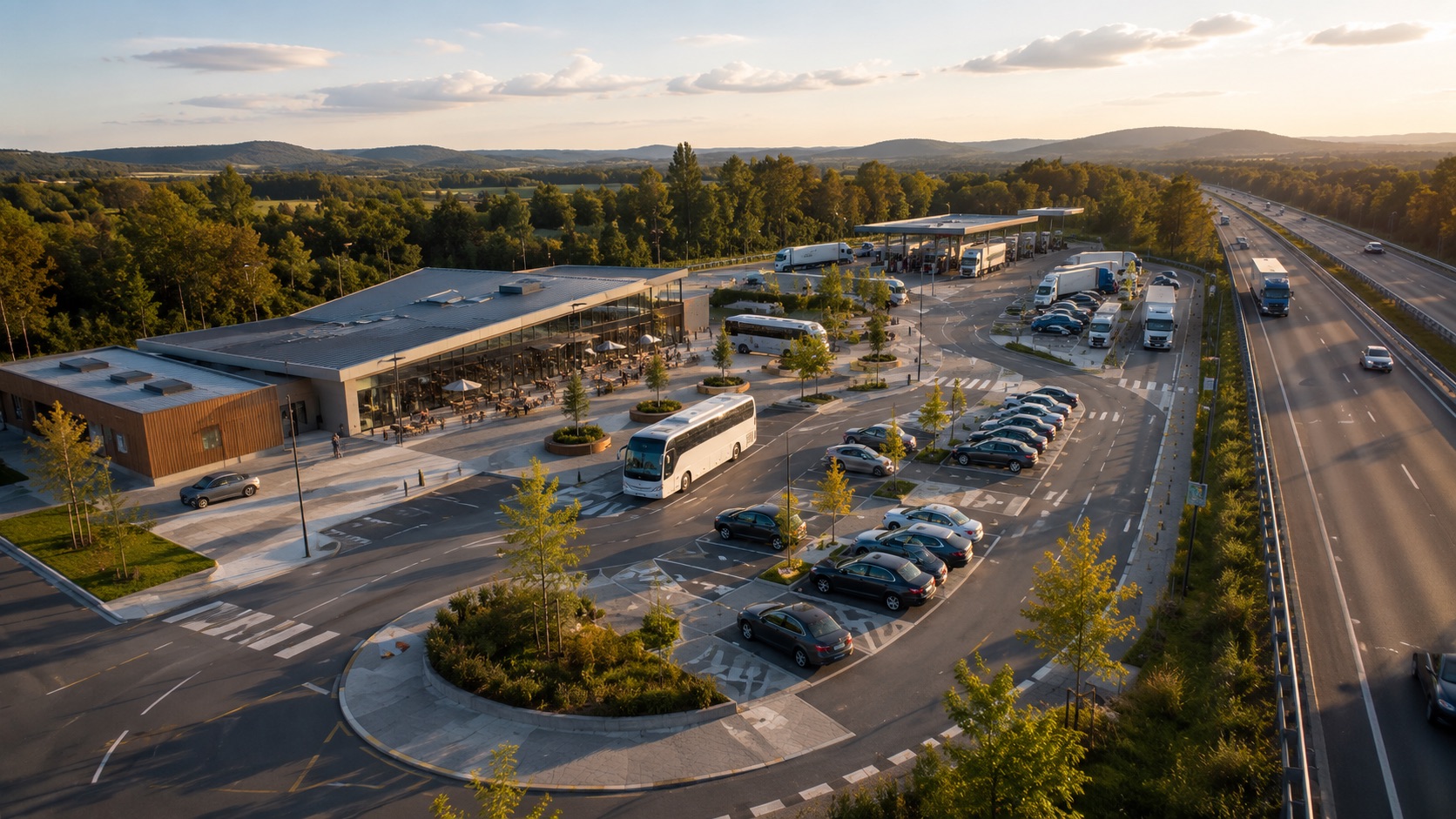
A motorway rest stop is more than just a collection of parking spaces. For many travelers, it is the only planned stop on a long journey. The impression they take away determines whether they will return. So, what makes a good location? Several factors are particularly significant.
Accessibility and a clear process
A site functions primarily through its accessibility and infrastructure. This includes clear entrances, sufficient parking for cars, trucks, and coaches, as well as wayfinding that is immediately understood even when tired or in a hurry. Anyone stopping after hours behind the wheel does not want to have to orient themselves; they want to arrive. A well-thought-out layout often determines satisfaction more than any individual service. It ensures that traffic flows and that pedestrians and vehicles do not get in each other’s way.
The right offering in the right place
Not every location needs the same thing. A heavily used freight route has different requirements than a route with many holiday travelers. Gastronomy, shops, filling stations, and charging infrastructure must therefore be tailored to actual demand. Site development means looking closely. Who stops here, at what time of day, and with what need? A long-distance truck driver at night needs something different than a family at the start of their holidays. Only when the offering matches the need does a stop become a good stop.
"A location is successful when guests leave it and intend to stop here again next time."
Development with foresight
A good rest stop is never finished. Cleanliness, maintenance, new services, and the integration of charging infrastructure are tasks that grow over the years. Those who think of locations in the long term do not invest in quick effects, but in reliability. This is precisely the difference between a place one heads for out of necessity and one where one enjoys taking a break. To ensure that a stop with us is still a good one in ten years, we are already planning it for that today.